The Green Man
Scottish Country Dance Instruction
THE GREEN MAN (R8x24) 3C (4C set) Barry Skelton Celtic Book1- 8 1s+3s set advancing and Balance-in-Line (Man above Lady); 1s+3s dance ½ RSh reel of 4 up/down centre (RSh to partner). End in line up/down centre, Lady above Man all facing own side
9-16 1s+3s Balance-in-Line and dance out to own side. 321; 3s+2s dance ½ RH across, retain partner's hand and cross to own side. 231
17-24 1s cross RH and cast up to 2nd place opposite side (3s step down 19-20); 1s dance ½ Fig of 8 (1L up round 2s, 1M down round 3s). 213
(MINICRIB. Dance crib compiled by Charles Upton, Deeside Caledonian Society, and his successors)
Dance Information
The Green Man is a traditional decorative figure found in European architecture and folklore, usually represented as a face surrounded by or formed from leaves and vegetation.Green Man carvings are especially associated with churches, cathedrals and historic buildings throughout Britain and Europe. Most surviving examples date from the medieval period, although similar imagery appears in much earlier art.
The figure became widely known as the "Green Man" during the twentieth century after research by Lady Raglan, who published an article on the subject in 1939. Since then, the Green Man has often been linked with nature, renewal and seasonal growth.
Modern interpretations sometimes connect the Green Man with ancient pagan beliefs, although direct historical evidence for a single continuous tradition is limited.
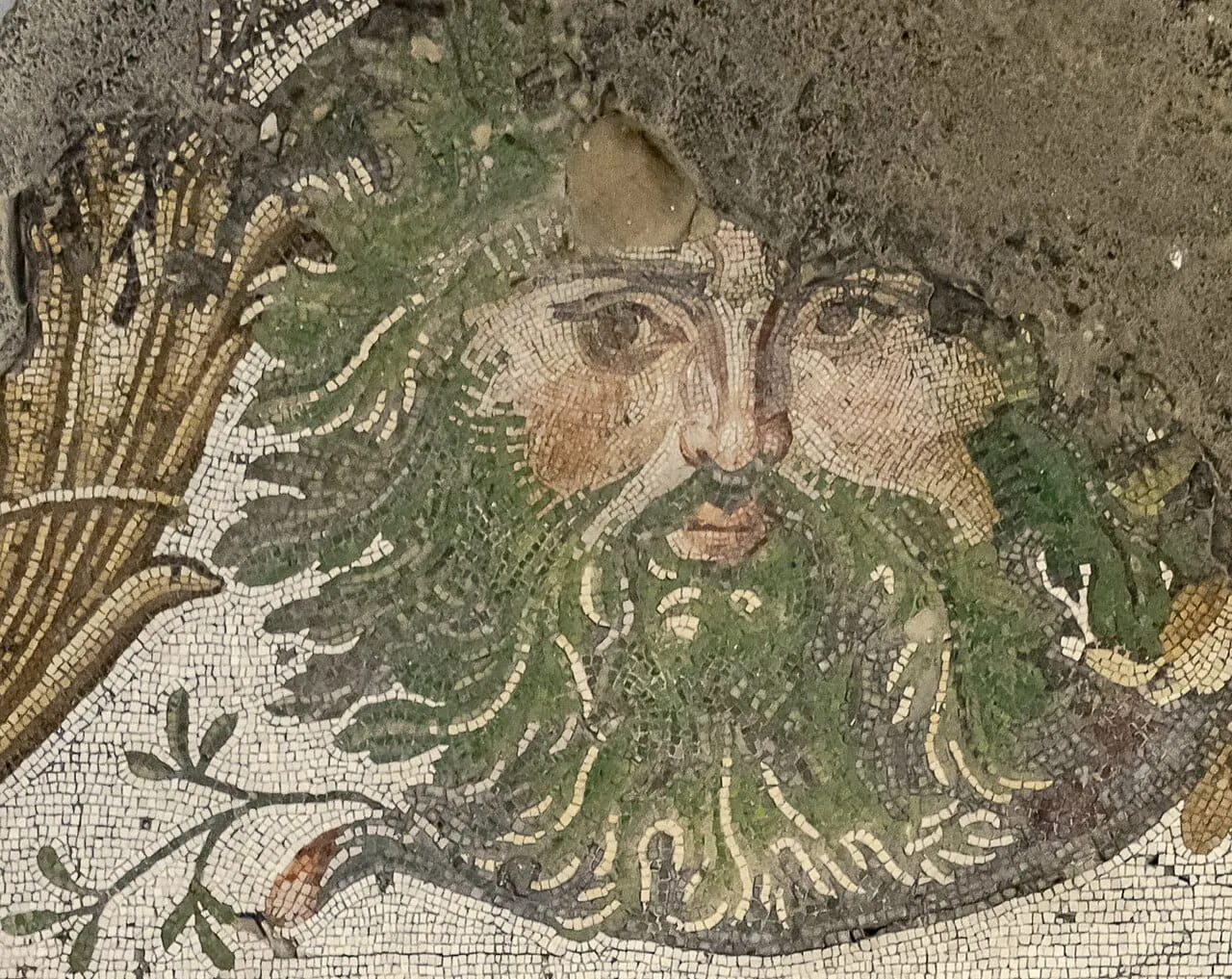
6th-Century Byzantine Mosaic In The Great Palace Mosaic Museum, Istanbul
This page uses content under the Creative Commons Attribution-ShareAlike 4.0 International License, along with original copyrighted content and excerpts from Wikipedia and other sources.
Text from this original Green Man article on Wikipedia.
Image copyright Ninara, CC BY 2.0, via Wikimedia Commons.
.jpg)
Back to the top of this Scottish Country Dancing Instructions 'The Green Man' page