The Grand Old Duke
Scottish Country Dance Instruction
THE GRAND OLD DUKE (R8x32) 3C (4C set) Chris Ronald Formation Foundations1- 8 1s lead down and back up to the top facing Ladies' side
9-16 1L followed by partner casts off 2 places, crosses below 3s, casts up to 2nd place, 1L crosses to own side, 1s finish facing down (2s step up 11-12) 213
17-24 All dance Grand Chain
25-32 2s+1s+3s dance 6H round and back
(MINICRIB. Dance crib compiled by Charles Upton, Deeside Caledonian Society, and his successors)
Dance Notes
Can be danced as a Reel, Strathspey or a Jig.Keith Rose's Crib Diagram

Dance Instruction Videos
The Grand Old Duke - Scottish Country Dancing Instruction VideoDance Information
This dance was devised as a teaching dance to introduce the Grand Chain formation.The title of this dance is probably taken from the English nursery rhyme The Grand Old Duke of York - Song of anonymous origin.
The rhyme refers to a duke who marched his men to the top of a hill and then marched them down again. The version known today was first recorded in the nineteenth century, although its exact origin is uncertain.
The "Grand Old Duke of York" is commonly identified as Prince Frederick, Duke of York and Albany, the second son of George III. Frederick served as Commander-in-Chief of the British Army for much of the period between 1795 and 1827. During the French Revolutionary Wars, he commanded British and allied forces in the Flanders Campaign of 1793–1795 in the Austrian Netherlands, an area that largely corresponds to present-day Belgium.
In 1793, Frederick led an allied army during operations against French Republican forces. The campaign included the Siege of Valenciennes and several engagements in the Low Countries. Allied forces advanced into French-held territory during part of the campaign, but French military successes during 1794 forced a withdrawal. By 1795, the coalition armies had retreated from the region.
Although the nursery rhyme is often connected with Frederick's military career, no contemporary evidence confirms that it was originally written about him. Other historical figures have also been suggested as possible subjects. The rhyme was circulating in printed form by the mid-nineteenth century and became widely known throughout Britain as a children's marching song.
A common modern version of the rhyme reads: "Oh, the grand old Duke of York, he had ten thousand men; he marched them up to the top of the hill, and he marched them down again". Numerous variations have been published, differing in wording and the number of men mentioned. The rhyme is catalogued as number 742 in the The Oxford Dictionary of Nursery Rhymes.
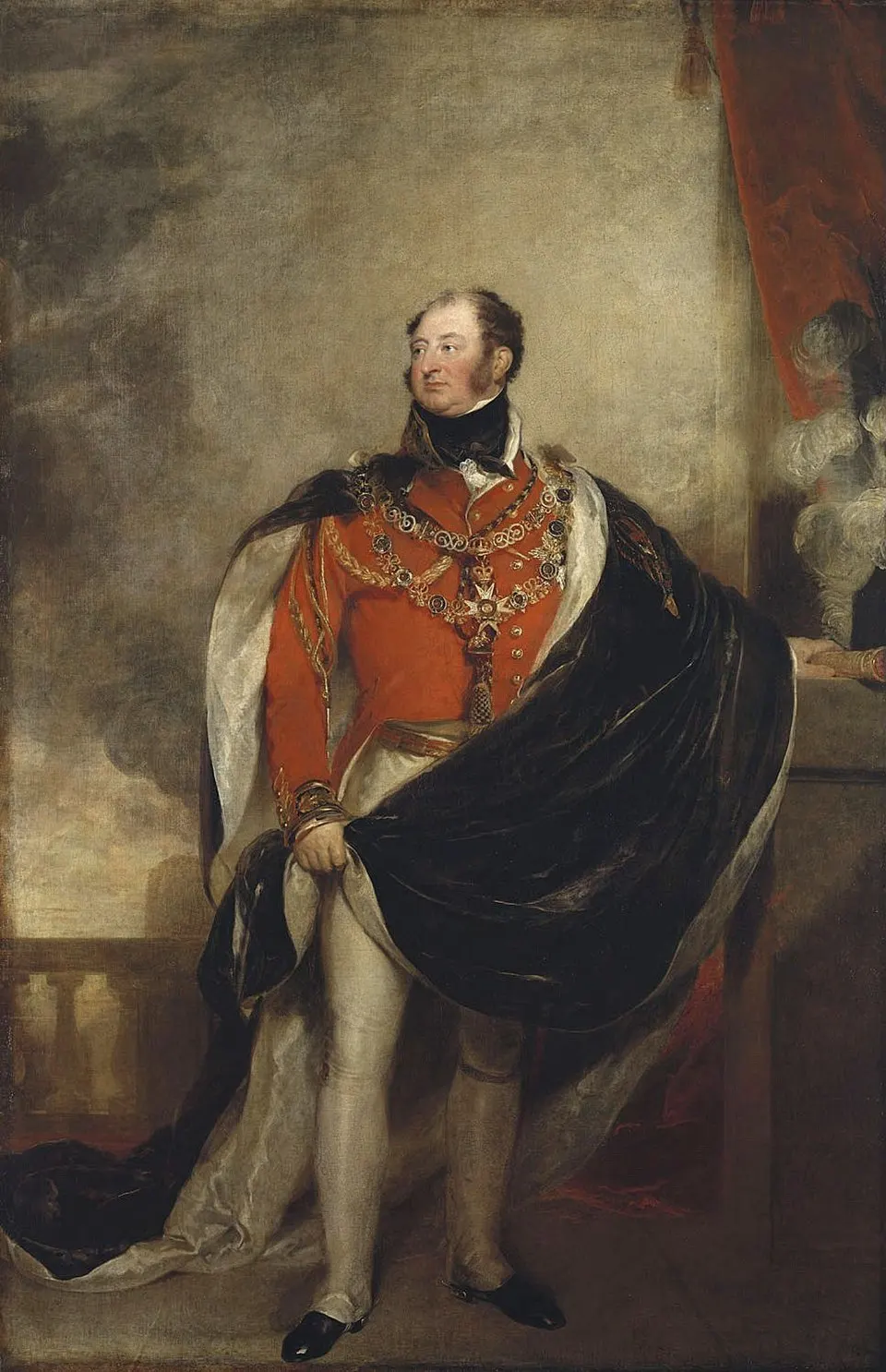
"Frederick, Duke Of York ", Thomas Lawrence (1769–1830), Oil On Canvas, c. 1816
This page uses content under the Creative Commons Attribution-ShareAlike 4.0 International License, along with original copyrighted content and excerpts from Wikipedia and other sources. See our Copyright and Reuse Policy for details.
Text from this original The Grand Old Duke Of York article on Wikipedia.
Image from Thomas Lawrence, Public domain, via Wikimedia Commons.

Back to the top of this Scottish Country Dancing Instructions 'The Grand Old Duke' page