Market Cross Jig
Scottish Country Dance Instruction
MARKET CROSS JIG (J8x32) 3C (4C set) Alan Littlefair Cleveland Collection1- 8 1s turn LH 1½ times moving down to face 1st corner and dance ½ diagonal reel of 4 with 1st corners
9-16 1s turn LH to face 2nd corner and dance ½ diagonal reel of 4 with 2nd corners. 1s end in 2nd place opposite sides
17-24 1s dance RH across (Man up with 3s, Lady down with 2s); 1s dance ½ RSh reels of 3 on opposite sides (RSh to 2nd corner position to start)
25-32 1s dance LH across (Man down with 3s, Lady up with 2s) ending BtoB Lady facing up; All set and 1s Petronella turn to 2nd place own sides while 2s and 3s cross RH to own sides
(MINICRIB. Dance crib compiled by Charles Upton, Deeside Caledonian Society, and his successors)
Dance Information
This dance, Market Cross Jig, is part of the Cleveland Collection.Cleveland was an area in the north east of England. Its name means literally "cliff-land", referring to its hilly southern areas, which rise to nearly 1,500 ft (460 m).
The history of the Market Cross (or in Scots, a mercat cross) dates back to the medieval period, particularly in Europe, where it played a central role in both commerce and civic life.
During this time, towns and villages often did not have defined public squares or designated spaces for markets, so the Market Cross was erected as a symbol of the market's central location. The cross, typically constructed from stone, wood, or metal, was placed at a central point in the town - usually in the Market Square or the crossroads of major roads - where trade took place. Its primary function was to serve as a focal point for the market, ensuring that vendors and buyers knew where to gather.
The origins of the Market Cross can be traced to the early Christian period, when crosses were often erected in public places to mark important sites or events. As towns grew and became more established, these crosses evolved from religious symbols into secular markers of commerce and civic life. In many cases, the cross was seen as a symbol of authority, often sanctioned by the monarch or local lord, to govern the market's operations and regulate trade. Market officials or town clerks would frequently use the cross to announce important news, such as the opening or closing of the market or the establishment of laws or taxes related to trade.
By the late medieval period, Market Crosses had become more elaborate in design, often adorned with carvings, inscriptions, or statues. Some crosses even had canopies or shelters built above them, providing protection for those conducting business or seeking shade during hot weather. In some cases, the cross also served a religious function, marking the space where public prayers or blessings were held, or acting as a place for the public to gather during times of crisis or celebration.
With the rise of more organised urban centres, the establishment of formal marketplaces, and the increasing importance of municipal governance, the role of the Market Cross began to decline. By the early modern period, the use of crosses as market markers became less common, and many crosses were dismantled or fell into disrepair. Despite this, numerous Market Crosses have survived into the present day, preserved as historical landmarks. They remain important symbols of the medieval town's economy, faith, and civic structure, and many are still protected as cultural heritage sites, attracting both locals and tourists interested in their rich history.
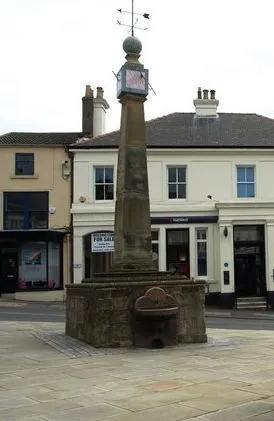
Market Cross, Guisborough, Cleveland
This page uses content under the Creative Commons Attribution-ShareAlike 4.0 International License, along with original copyrighted content and excerpts from Wikipedia and other sources. See our Copyright and Reuse Policy for details.
Text from this original Cleveland, England article on Wikipedia.
Text from this original Market Cross article on Wikipedia.
Image copyright David Gearing under this Creative Commons Licence 2.0.
Back to the top of this Scottish Country Dancing Instructions 'Market Cross Jig' page