The Matsuri Strathspey
Scottish Country Dance Instruction
THE MATSURI STRATHSPEY (S4x32) 4C Seiichi Watanabe Saitama 10th Ann. Collection1- 4 1s+2s and 3s+4s turn on sides (Ladies LH, Men RH)
5- 8 1s+2s+3s dance ½ reels of 3 on opposite sides (1s cross down, 2s out/up and cross down, 3s cross up)
9-12 3s+2s+1s dance ½ reels of 3 on own sides (3s cross down, 2s out/down and cross up, 1s cross up)
13-20 1s dance down 2 steps, turn 2H, dance down 2 steps, turn 2H to end in 4th place own sides (2s+3s+4s step up 19-20)
21-24 2s+3s and 4s+1s turn on sides (Ladies LH, Men RH) 1s and 3s face out
25-28 3s+4s+1s dance ½ reels of 3 on opposite sides (3s out/down and cross down, 4s cross down, 1s out/up and cross up)
29-32 1s+4s+3s dance ½ reels of 3 on own sides (1s out/down and cross down, 4s cross up, 3s out/up and cross up) 1s and 3s face out. 2341
(MINICRIB. Dance crib compiled by Charles Upton, Deeside Caledonian Society, and his successors)
Dance Information
Matsuri refers to traditional Japanese festivals that are celebrated across the country, each with its own unique customs, rituals, and cultural significance.The term "matsuri" is derived from the Japanese word for "festival" and generally refers to an event that is held to honour deities, commemorate historical events, or mark seasonal changes. These festivals are deeply rooted in Japanese culture and often involve a combination of religious ceremonies, processions, performances, music, dance, and community gatherings.
The essence of a matsuri is often tied to Shinto or Buddhist traditions, with many festivals held in connection with specific shrines or temples. For example, the Gion Matsuri in Kyoto, one of Japan's most famous festivals, honours the Yasaka Shrine and is believed to ward off illness and bring prosperity. Matsuri are typically held at different times of the year, often corresponding to key dates in the agricultural calendar or seasonal transitions, such as the summer or harvest season.
One of the most iconic features of many matsuri is the procession of mikoshi (portable shrines), which are carried through the streets by groups of people. The mikoshi represents the deity or spirit associated with the shrine, and its journey through the community is meant to bring blessings and protection to the area. Participants in these processions often wear traditional attire, such as yukata (summer kimono), and the atmosphere is festive, marked by chanting, music, and sometimes the use of taiko drums.
Matsuri also feature various types of performances, such as bon odori (traditional Japanese dance) and kagura (ritual music and dance performed at Shinto shrines). These performances are not only a form of entertainment but also an expression of respect for the gods, ancestors, and the natural world. Music, especially from taiko drumming, is an essential component of many matsuri, creating an energetic and vibrant atmosphere that draws people into the spirit of the celebration.
In addition to the religious and cultural aspects, matsuri also serve as important social events for communities. They offer opportunities for people to come together, share food, and enjoy the festivities. Stalls selling traditional festival foods, such as takoyaki (octopus balls), yaki-soba (fried noodles), and kakigori (shaved ice), are common at many matsuri, adding to the celebratory nature of the occasion.
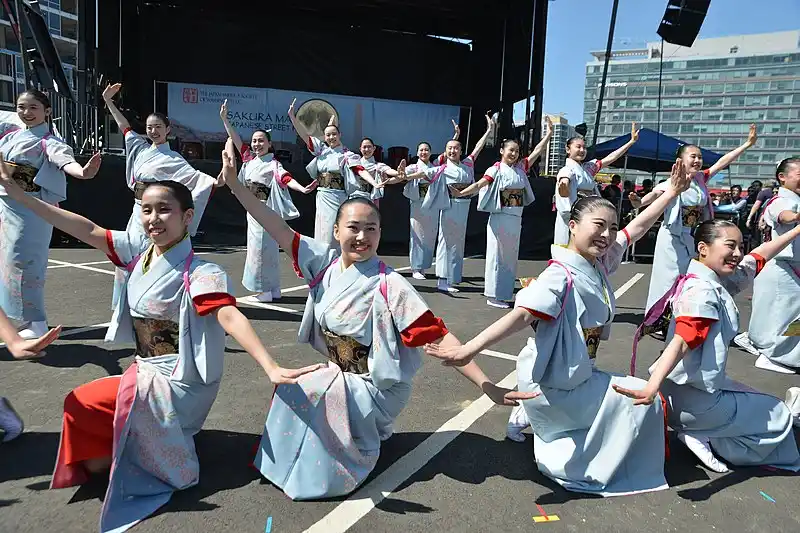
Sakura Matsuri Japanese Festival, 2016
This page uses content under the Creative Commons Attribution-ShareAlike 4.0 International License, along with original copyrighted content and excerpts from Wikipedia and other sources. See our Copyright and Reuse Policy for details.
Text from this original Japanese Festivals article on Wikipedia.
Image copyright S Pakhrin from DC, USA, CC BY 2.0, via Wikimedia Commons.
.jpg)
Back to the top of this Scottish Country Dancing Instructions 'The Matsuri Strathspey' page