Rakes Of Glasgow
Scottish Country Dance Instruction
RAKES OF GLASGOW (S8x32) 3C (4C set) Preston RSCDS Book 111- 8 1s+2s dance R&L
9-16 1s lead down the middle and back to top
17-24 1s+2s dance Allemande
25-32 2s+1s+3s circle 6H round and back
(MINICRIB. Dance crib compiled by Charles Upton, Deeside Caledonian Society, and his successors)
Keith Rose's Crib Diagram

Dance Instruction Videos
Rakes Of Glasgow - Scottish Country Dancing Instruction VideoDance Information
"Rakes of Glasgow" appeared in "Twelve Favourite Country Dances for the Year 1806", published by Preston in London. The collection included both dance instructions and music. The original composer of the tune and deviser of the dance have not been established.The title "Rakes of Glasgow" uses the eighteenth-century meaning of "rake", a man known for dissolute behaviour, particularly drinking, gambling and pursuing women. The word was shortened from "rakehell", a term in use from the sixteenth century.
Other country dances bearing similar titles included "Rakes of London", "Rakes of Rochester", "Rakes of Tunbridge", "Rakes of Nairn" and "Rakes of Dublin".
Glasgow, Scotland's largest city, stands on the River Clyde in the West Central Lowlands. Its inhabitants are known as "Glaswegians", or informally as "Weegies".
The city developed from a small settlement beside the Clyde into a medieval religious and trading centre. The establishment of the University of Glasgow in 1451 contributed to its growth as a centre of learning, while the eighteenth century brought increasing involvement in the Scottish Enlightenment and expanding trade with North America and the West Indies.
During the Industrial Revolution, Glasgow's population and industries grew rapidly. The city became a major centre for textiles, chemicals and engineering, with shipbuilding and marine engineering developing into particularly large industries. Its shipyards on the Clyde constructed vessels for customers throughout the world, helping to establish Glasgow as one of Britain's principal industrial cities and ports.
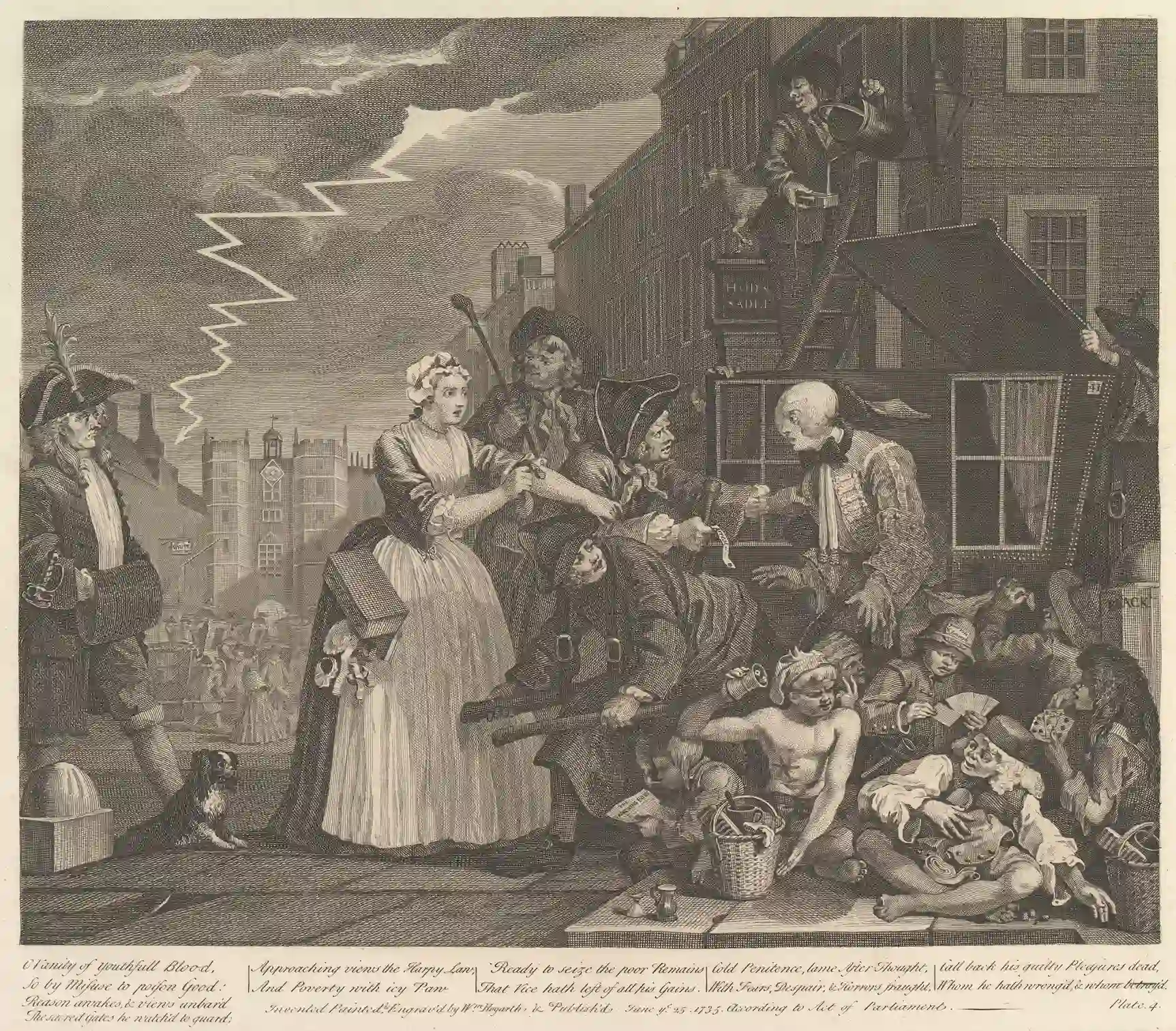
A Rake's Progress, Plate 4, William Hogarth (1697–1764), Etching And Engraving, c. 1735
Depicting The Arrest For Debt Of Tom Rakewell, An Eighteenth-Century Rake
This page uses content under the Creative Commons Attribution-ShareAlike 4.0 International License, along with original copyrighted content and excerpts from Wikipedia and other sources. See our Copyright and Reuse Policy for details.
Information from this original Glasgow article on Wikipedia.
Image copyright (cropped) William Hogarth, CC0, via Wikimedia Commons.

Back to the top of this Scottish Country Dancing Instructions 'Rakes Of Glasgow' page